
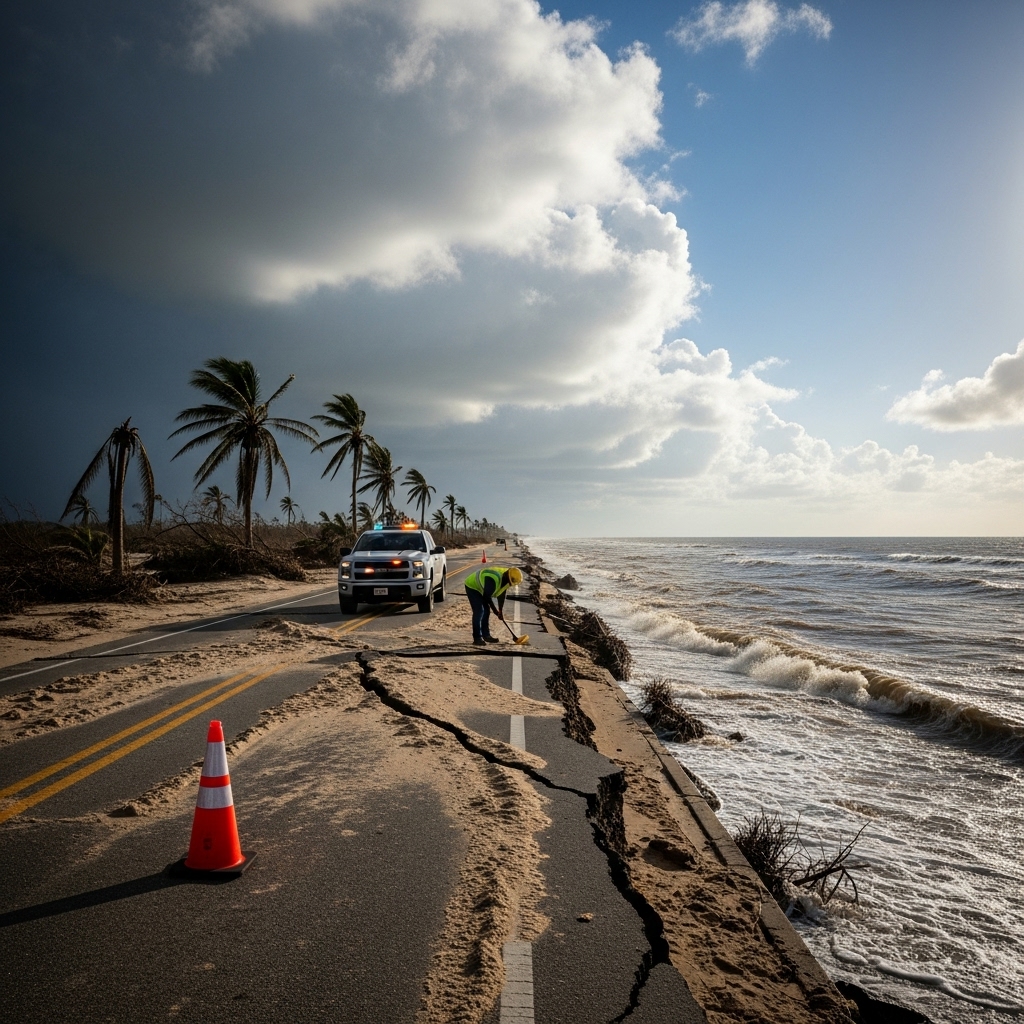
You did everything right. You paid your premiums. Then the storm hit. Your roof peeled back, rain blasted inside, and a day later surge or street flooding finished the job. The adjuster’s letter shows up with the gut‑punch: “Your loss was flood, not wind. Anti‑concurrent causation applies.”
Take a breath. You’re not crazy. Wind can rip the envelope first, and water shows up later. The sequence matters—and so does the proof.
Quick Answers to Urgent Questions
Is wind or flood covered under my policy?
Homeowners generally covers wind. Flood requires a separate NFIP/private flood policy. Many policies use anti‑concurrent causation (ACC) language to deny when wind and flood both contribute.
Can I beat an ACC denial?
Potentially—by documenting any wind damage that occurred independently and/or before any flood. Policy language and jurisdictional law control.
Do I need to file both a homeowners and a flood claim?
Usually yes. Open them separately. Keep them siloed. Don’t let one adjuster “speak for” the other.
Your 72‑Hour Action Plan to Position Your Claim
1) Safety and mitigation
Tarp the roof, board windows/doors, extract water, and run dehumidifiers. Keep receipts and photos. Mitigation is required by most policies.
2) Lock down evidence now
- Time-stamped photos/videos: roof, attic, ceilings, windows, doors, exterior elevations, contents. Capture water and debris lines.
- Save damaged pieces (shingles, siding, window frames) in labeled bags/boxes for inspection.
- Pull pre-storm photos, inspection reports from closing, permits, and maintenance records.
3) Open separate claims
Homeowners/wind with your carrier; flood with NFIP or your private flood carrier. Log claim numbers, adjuster names, dates, and every call.
4) Start a simple evidence log
A spreadsheet with WHO/WHAT/WHEN/WHERE for every photo, call, invoice, and inspection. This turns chaos into a timeline.
What Is an Anti‑Concurrent Causation Clause?
In plain English: “If an excluded cause (like flood) and a covered cause (like wind) both contribute to the loss—at the same time or one after the other—we don’t pay.”
Why insurers use it: After hurricanes, wind and water often arrive hours apart. ACC gives carriers a quick path to lump everything into “flood.”
The path around ACC: Prove distinct, standalone wind damage and/or prove wind occurred first and caused a separate covered loss before any flood.
Build Your Wind‑First Proof Package
Time and sequence matter. Here’s what moves the needle:
Objective storm data
- NOAA/National Hurricane Center advisories, local NEXRAD radar with gust timestamps.
- Tide gauge data to show when surge arrived (NOAA Shell Beach and Bay Waveland gauges for the MS/LA coast; USGS/NOAA gauges across Galveston Bay).
- Local utility outage timelines (Entergy New Orleans/Jefferson Parish; Mississippi Power; CenterPoint Energy in Houston).
Real‑world, time‑stamped sources
911 call logs, neighbor texts, Lake Pontchartrain Causeway toll records during evacuation, traffic camera archives (I‑10/I‑610 in Houston), Ring/Nest videos, even social posts that show wind damage before any flooding.
Forensic indicators
- Wind: shingle uplift/creases, missing ridge caps, outward-blown walls/doors, rafter separation, frame racking, wind-driven rain paths into the attic and walls.
- Flood: uniform waterlines, lateral scouring, silt residue patterns, and inward impact from floating debris.
Experts to consider early
Forensic engineer (building envelope), certified roofing contractor, meteorologist, hydrologist, and a contents specialist.
Documentation that wins
Drone roof mapping, attic moisture readings, infrared scans, preserved physical samples (spoliation controls), and room-by-room contents lists with pre/post values.
Policy archaeology: mine your paperwork for wind-friendly provisions
Get a certified, complete copy of your file:
Declarations, homeowners forms, endorsements, flood policy, any lender-placed coverage, and renewal change notices.
Flag these clauses:
- ACC language; definitions of “water damage,” “surface water,” “storm surge.”
- Ensuing loss/tear-out coverage; wind-driven rain endorsements; roof surfacing limitations/exclusions.
- Ordinance or Law (code upgrades); Additional Living Expense (ALE)/Loss of Use; Business Interruption for commercial.
Watch your deductibles and sublimits:
Named storm/hurricane/windstorm deductibles; mold/microbe caps; sewer/backup endorsements.
State-by-state angles that help beat ACC
Mississippi (Gulfport/Biloxi)
Courts have held (e.g., Corban v. USAA, Miss. 2009) that ACC does not bar coverage for wind damage occurring before flood. The insurer must prove excluded water caused the specific loss. Practical: isolate pre-surge wind damage; force apportionment; consider bad faith if everything gets labeled “flood.” Consult qualified counsel in that state to confirm current law.
Texas (Houston/Galveston)
Courts have held (e.g., JAW The Pointe v. Lexington, Tex. 2015) that ACC can bar coverage if excluded flood is part of the causal chain. Practical: robust expert apportionment is critical. Use the Prompt Payment of Claims Act (Tex. Ins. Code Ch. 542) for interest/penalties on slow pay and Chapter 541 for unfair settlement practices. Consult qualified counsel in that state to confirm current law.
Louisiana (Metairie/New Orleans)
Courts enforce policy language. The Louisiana Valued Policy Law can help in total losses caused by a covered peril (not by excluded flood). Practical: prove a discrete wind-caused total or constructive total loss. Use La. R.S. 22:1892 (30-day pay) and 22:1973 (bad faith) for delay/underpayment. Consult qualified counsel in that state to confirm current law.
Counter the playbook: common carrier tactics and your response
Expect to see:
“Flood-borne,” “hydrostatic,” “pre-existing,” “wear and tear,” “faulty construction,” “no opening created by wind.”
Your countermoves:
- Demand the entire claim file: all photos (with metadata), scope notes, adjuster logs, and engineer drafts. Ask for reinspection and targeted destructive testing.
- Challenge the methodology: Did their engineer climb the roof? Probe the deck? Match timestamps to storm and tide data?
- Get a second opinion: Independent engineer/roofer; push for joint inspections. Preserve and label materials to defeat “we can’t tell” arguments.
- Keep wind and flood scopes siloed: Don’t let a flood adjuster cap your wind claim—or vice versa.
When a bad decision becomes bad faith
Red flags:
Rotating engineers, “revised” reports, partial photo sets, misquoted policy language, or months of silence after you submit evidence.
Demand letters and complaints:
- Louisiana: 30/60-day payment triggers under La. R.S. 22:1892/1973; file with the Louisiana Department of Insurance.
- Mississippi: Department of Insurance complaints; punitive exposure for egregious conduct.
- Texas: Prompt Payment Act (Ch. 542) interest/penalties; Insurance Code 541; file with the Texas Department of Insurance.
Don’t forget your damages:
ALE, code upgrades (Ordinance or Law), business interruption, and contents. In some cases, mental anguish damages may be available.
What storm damage litigation looks like (and how we keep it client-friendly)
Pre-suit
Engineer/meteorology packages, sworn neighbor statements, and detailed settlement demands with apportionment exhibits.
Suit filed
We disclose experts (forensics, meteorology, hydrology, estimators, contents), coordinate site inspections, and set destructive testing protocols that actually answer causation.
Depositions
Field adjusters, IA firms, desk examiners, and engineers. We bring the timeline—radar + tide + power outage—to every deposition.
Motions and resolution
Exclude junk science; pursue partial summary judgment on discrete wind losses even with ACC in the policy. Choose the right exit ramp: appraisal, mediation, or trial—based on your facts and leverage.
Special scenarios we see across the Gulf
Slab/constructive total loss
Prove wind tore the envelope before surge using eyewitnesses, debris trajectory, uplift signatures, and timeline evidence.
Condos/HOAs
Master vs. unit-owner coverage; wind-driven rain into common elements; special assessments and Ordinance or Law.
Commercial and churches
Business interruption causation, civil authority, and off-premises utility endorsements.
Appraisal
Use it surgically. Narrow the scope to wind values; preserve your bad faith claims while appraising the amount of loss.
Local, practical evidence sources (even if you evacuated)
New Orleans/Metairie
Lake Pontchartrain Causeway toll records, City of New Orleans One Stop permit timelines, Entergy outage maps, NOAA Shell Beach tide data.
Gulfport/Biloxi
US‑90 debris-line photos, NOAA Bay Waveland tide gauge, Mississippi Power outage logs.
Houston/Galveston
Harris County Flood Control gauges, CenterPoint outage timelines, TxDOT camera archives along I‑10/I‑610.
We coordinate joint inspections and evidence handling from our Metairie, Gulfport, and Houston offices so you don’t have to ship samples blindly.
Deadlines and traps that kill strong claims
Suit limitation periods
Many homeowners policies require suit within 1–2 years (sometimes shorter). NFIP flood suits must be filed within one year of written denial in federal court.
Proof of Loss
NFIP requires a signed Proof of Loss (typically within 60 days unless extended by FEMA). Homeowners Proofs vary by policy—don’t miss them.
Don’t sign the wrong release
Consult counsel before signing any release, especially if multiple claims are involved.
What to do today if your insurer is blaming flood for wind
Checklist:
- Request your entire claim file and engineer reports in writing today.
- Download NOAA/NHC storm reports and the nearest tide gauge records; save screenshots with timestamps.
- Book an independent roof/forensic inspection; preserve samples under chain of custody.
- File or update both wind and flood claims with separate scopes; track all ALE receipts.
- Keep communications firm and factual—no venting by text or email.
- Call for a free “Wind vs. Water” file audit. We’ll map your wind timeline, line up the right experts, and push your carrier off the ACC crutch toward pursuing the benefits available under your policy. Outcomes vary; expect responsibility for deductibles and any non-covered costs.
Why Insurance Claim HQ
We try cases. We do the depositions. And we also show up in jeans and boots with the right experts when your roof needs a real look—not a drive-by denial. We’re built for Gulf Coast storms, and we keep you in the loop without the runaround.
- Metairie HQ: 3001 17th Street, Metairie, LA 70002
- Gulfport: 204 Courthouse Rd, Suite A, Gulfport, MS 39507
- Houston: 1 Riverway, Houston, TX 77056
- Also available in Atlanta (1201 W Peachtree St NW, Suite 600) and Boston (44 School St, 6th Floor) to coordinate experts and overflow.
Contingency-fee representation may be available where permitted by law. Court costs and case expenses may be the client’s responsibility, per the written engagement agreement. You control settlement decisions.
Schedule your free “Wind vs. Water: Beating Anti-Concurrent Causation” strategy session at insuranceclaimhq.com. We’ll build your timeline, assemble the proof, and pursue the benefits available under your policy. Contact us to schedule a no-obligation strategy session.
Attorney Advertising. General information only; not legal advice. Reading this content does not create an attorney–client relationship. Results vary; no guarantee. Representation is limited to jurisdictions where our lawyers are licensed, and we associate with local counsel when required. Contingency-fee representation may be available; court costs and case expenses may be the client’s responsibility as outlined in a written engagement agreement. Coverage outcomes depend on specific policy language and facts—review your policy and deadlines with a qualified attorney licensed in your jurisdiction.