
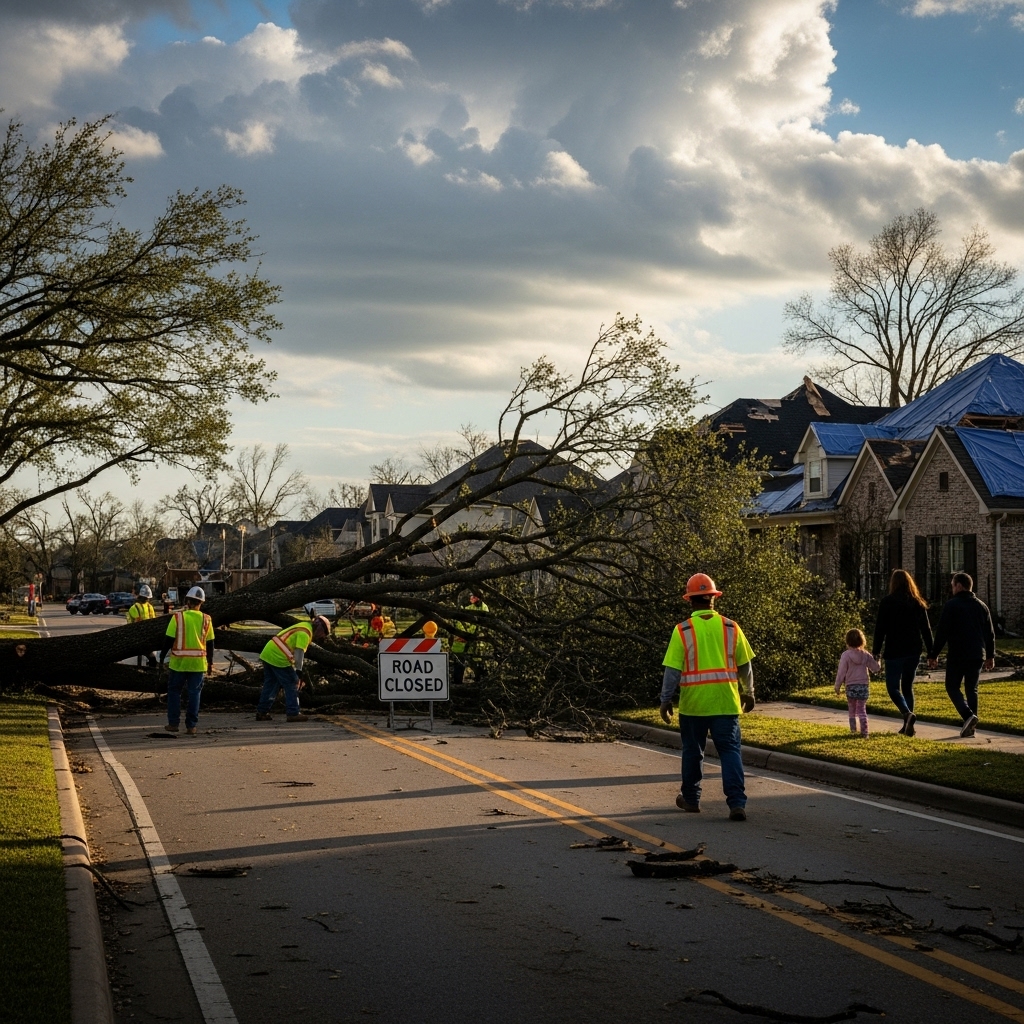
When straight‑line winds tear through Uptown, the Galleria, or along the 610 Loop and your carrier says “that’s just wear and tear,” it keeps you up at 2 a.m. You’re staring at a blue tarp, wondering if you’re stuck paying for a new roof out of pocket.
Quick truth: many property policies cover sudden and accidental direct physical loss caused by wind. The fight is proving wind caused new damage, not age or maintenance. That’s our lane. We rebuild community, not just cases. You don’t need a three‑piece suit—you need a plan. Here’s yours.
Quick Answers: Top 5 Questions After a Houston Derecho or Microburst
- Is a derecho/microburst a covered wind event? Often yes, but the policy controls. Many property policies cover “sudden and accidental direct physical loss” caused by wind.
- Do I need a “wind‑created opening”? Some policies require a wind-created opening for interior water coverage; endorsements vary. Roof surface damage can still be covered without interior water if wind damaged the roof—policy language controls.
- My roof is older. Am I out of luck? No. Age is not an exclusion. Show event‑specific wind damage, not just deterioration.
- Can they call it “cosmetic”? They might try. Many policies exclude “marring/cosmetic” changes. We gather proof of functional damage that shortens service life or compromises watertightness.
- Already denied or lowballed? You can supplement, request reinspection, invoke appraisal (price/scope disputes), or file suit under Texas bad‑faith and Prompt Payment laws.
---
Derecho vs. Microburst: Why the Wind Mechanism Matters to Your Claim
- Derecho: a long‑lived, fast‑moving band of straight‑line winds—a “freight train” crossing I‑10, I‑45, and the 610 Loop, causing uniform directional damage over a broad corridor.
- Microburst: an intense downdraft with a small footprint. Damage radiates outward from a center point, highly localized block‑to‑block.
Why insurers push “wear and tear”
- Adjusters lean on exclusions for wear, deterioration, and maintenance when causation is fuzzy.
- Your job (and ours) is to tie roof and exterior damage to a specific date/time wind event using on‑the‑ground photos plus weather proof.
Policy hooks to leverage
- “Sudden and accidental direct physical loss” wording for wind.
- Wind/hail deductible (these events are not “named storms”).
- Interior water rules: some policies require a wind‑created opening; others have wind‑driven rain limitations—know your endorsements.
- Exclusions/endorsements that matter: “cosmetic roof surfacing,” roof ACV schedules, matching limitations, and ordinance or law coverage.
---
First 48 Hours: Do This Now to Prove Wind—not Wear and Tear
Safety and mitigation
- Photograph/video everything before you tarp. Then tarp, board up, and stop further damage. Keep receipts and vendor contacts.
- Don’t discard damaged materials. Bag and label samples (e.g., shingle tabs) by slope/location and date.
Documentation fundamentals
- Take time‑stamped photos of every roof slope by compass direction; close‑ups of creased tabs, lifted shingles, missing ridge caps; displaced flashing; interior stains and moisture trails.
- Save proof of the event: screenshots of CenterPoint Energy outage maps, NWS Houston/Galveston warnings on your phone, neighbor texts/posts.
- Start a claim journal: date/time, who you spoke with, what was said, promised next steps.
Preserve the scene
- Get moisture mapping (infrared camera) before aggressive drying. Save IR photos.
- Drone overview (your contractor can help) with altitude, compass bearing, and overlapping images for photogrammetry.
- Hunt for pre‑storm photos (real estate listings, prior inspections, Google Street View time‑lapse) to show condition before the winds.
---
The evidence checklist: How we separate wind damage from age on roofs and exteriors
Roof‑specific wind indicators
- Creased shingles with fractured mats (a sharp fold line—more than granule scuffing).
- Broken sealant/bead transfer and uplift at leading edges consistent with wind direction.
- Ridge/hip losses, displaced flashing, fresh fastener pull‑throughs.
- For TPO/metal: fastener back‑out, seam failures, panel deformation aligned to wind pressures.
Derecho/microburst field signatures
- Consistent debris vectors across your block (derecho) vs. divergent patterns around a point (microburst).
- Failures on windward elevations: window seal failure, siding punctures, soffit dislodgement.
Interior corroboration
- New staining trails under penetrations (vents, chimneys) with moisture readings logged around the event date.
- Attic photos: daylight through deck joints, displaced underlayment, wet insulation.
Common wear‑and‑tear tells (and how to rebut)
- Thermal blistering, manufacturer defects, UV granule loss, random footfall scuffs—non‑directional patterns and oxidation suggest age.
- Rebut with pre‑loss condition (prior clean inspections, permits), neighborhood‑wide event data, and directional wind evidence.
---
Build your “wind file”: External proof that locks in the event at your address
Meteorology to pull now
- NOAA/NWS Houston–Galveston Storm Events Database: event type, gusts, warnings for your date/time.
- Radar snapshots (reflectivity and velocity) time‑synced to your address.
- METARs from IAH (KIAH) and Hobby (KHOU); Harris County Flood Control District gauges; TxDOT camera captures if available.
Neighborhood corroboration
- Affidavits or texts from neighbors on your block; photos showing consistent directional damage on Westheimer, San Felipe, and around the Galleria/Uptown near 1 Riverway.
- HOA/community emails, 311 service reports, and contractor logs of same‑day emergency tarping nearby.
---
Working the claim: Communications, policy pulls, and adjuster strategy
Ask for your complete policy
File the claim and request a certified, complete policy with all endorsements in effect on the date of loss. Confirm deductibles, any roof ACV/cosmetic exclusions, and ordinance or law limits in writing.
Prepare for inspections
- Be present or have a pro there. If permissible, document the inspection. Recording laws vary. Ask for full‑slope reviews and interior checks when water is present. Insist on safe laddering.
- Hand the adjuster your evidence packet. If they cite “wear and tear,” ask them to identify it slope‑by‑slope and explain how it overcomes your wind proof.
Put everything in writing
- Follow every call with a short recap email. Upload photos, invoices, and weather proof to the carrier portal—and save your own cloud copy.
- If denied or lowballed, request the adjuster and engineer reports, carrier photos, and claim file notes. Ask for reinspection with your roofer/engineer present.
---
Bring in the right pros (without over‑engineering it)
- Roofing expert (HAAG or comparable) for slope‑by‑slope condition and repairability/brittleness testing.
- Forensic engineer for roof system failure and wind‑created opening opinions.
- Forensic meteorologist to tie wind speeds/directions to your coordinates at the loss time.
- Moisture specialist for mapping, drying protocols, and interior build‑back scope.
- ITEL for material ID and discontinued/matching issues; Xactimate/X1 scoping for proper pricing.
Cost control tip: Use targeted experts. Often, a qualified roofer’s report plus a strong weather package proves causation without unnecessary spend.
---
Common insurer defenses—and how we counter them
“No wind‑created opening”
Counter with uplift/crease evidence, broken seals, displaced flashing, and interior moisture trails aligned to the event. Many policies cover direct physical loss to the roof itself even without interior water.
“Cosmetic only”
Prove functional damage: fractured mats, failed seals, shortened service life, and manufacturer repairability limits (e.g., brittle shingles can’t be repaired without further damage).
“Pre‑existing wear/installation defect”
Produce pre‑loss history, permits, maintenance invoices, and block‑wide event data. If the policy’s fine print doesn’t shut it down, we argue the dominant cause was wind (insurers sometimes rely on “anti‑concurrent causation” clauses—we explain and challenge those when wind is the driver).
“Old roof, ACV only”
Where replacement cost applies, calculate and recover depreciation after repairs. Challenge roof surfacing schedules and push for full RCV where language and causation support it.
---
Appraisal, bad faith, or lawsuit? Choosing the right Texas path
Appraisal (amount of loss process)
Useful when price/scope is the dispute—not when coverage/causation is denied. Choose a seasoned appraiser. If the carrier is denying coverage outright, appraisal may stall your claim.
Texas bad faith and Prompt Payment leverage (general information—confirm current law). Consult a Texas-licensed attorney about current law.
- Texas Insurance Code Chapter 541 (unfair settlement practices/bad faith) and Chapter 542 (Prompt Payment) apply. Carriers have strict timelines to acknowledge, investigate, decide, and pay. After catastrophes, some deadlines can extend, but delays still carry penalty interest under 542.
- Weather claims require pre‑suit notice (60 days) under 542A. Carriers can try to elect responsible parties—we navigate that so you keep your leverage.
Litigation roadmap (Harris County)
- Pre‑suit notice with a detailed demand; file suit; written discovery; depositions; expert causation proof; mediation; trial.
- Our philosophy: we try cases and pursue available policy benefits. Outcomes vary; expect responsibility for deductibles and any non-covered costs.
---
Dollars and build‑back: Scoping what it really takes to fix it
Scope it right the first time
Full system replacements when required by code/manufacturer: underlayment, flashing, ridge/hip, vents, drip edge. Include ordinance or law coverage, deck re‑nailing, and ice/water shield where mandated.
Contents and ALE
Document damaged contents with photos and purchase records. Track Additional Living Expenses if your home is uninhabitable—keep receipts for lodging, meals, and extra mileage.
Contractor agreements to avoid
Don’t sign away your claim or agree to “assignment of benefits” without a legal review. Insist on detailed, line‑item scopes. Never let a contractor “eat the deductible”—that’s risky and can void coverage.
---
Local, boots‑on‑roof help in Houston
If you’re near Uptown/Galleria or along Westheimer/San Felipe, bring your photos to our Houston office or we’ll come to you:
- Insurance Claim HQ – Houston
- 1 Riverway, Houston, TX 77056
Useful local touchpoints
- NWS Houston/Galveston alerts and Storm Events Database.
- Harris County Flood Control District gauges.
- CenterPoint outage verifications.
- City of Houston Permitting for roof work.
We show up in polos and boots, not just suits. If your block along the 610 Loop lost shingles the same night, that’s not “wear and tear”—that’s wind. Let’s prove it.
---
Your path to resolution: From claim to rebuild
Week 0–1
Mitigate and document. File your claim. Demand the certified policy. Schedule a pro inspection. Deliver your wind evidence packet to the carrier.
Week 2–4
Adjuster/engineer inspections. Supplement with expert reports. Request reinspection as needed.
Month 2–3
If the number is still wrong: appraisal for amount‑of‑loss disputes or pre‑suit notice under 542A for coverage/bad‑faith issues. Negotiate with meteorology + engineering in hand.
Month 3+
File suit if necessary. Aim for settlement or trial with bad‑faith leverage. Start build‑back with an approved, code‑compliant scope.
---
Talk to a storm claim trial team that lives this work
Our practice includes property insurance claims and bad-faith litigation. We try cases and work to pursue the benefits available under your policy. Outcomes vary; expect responsibility for deductibles and any non-covered costs.
- Free consultation: insuranceclaimhq.com (no cost to meet and discuss your options)
- Houston office: 1 Riverway, Houston, TX 77056
- Matters are handled by attorneys licensed where required; we associate with local counsel when needed. Availability may vary by jurisdiction.
If your insurer is calling wind “wear and tear,” let’s change the conversation. We’ll help you prove wind, secure the right scope, and pursue the benefits available under your policy. Contact us to schedule a no-obligation strategy session.
Attorney Advertising. General information only; not legal advice. Reading this content does not create an attorney–client relationship. Results vary; no guarantee. Representation is limited to jurisdictions where our lawyers are licensed, and we associate with local counsel when required. Contingency-fee representation may be available; court costs and case expenses may be the client’s responsibility as outlined in a written engagement agreement. Consult a Texas-licensed attorney about Prompt Payment/Chapter 541 requirements and other state-specific rules. Coverage outcomes depend on policy language and facts.