
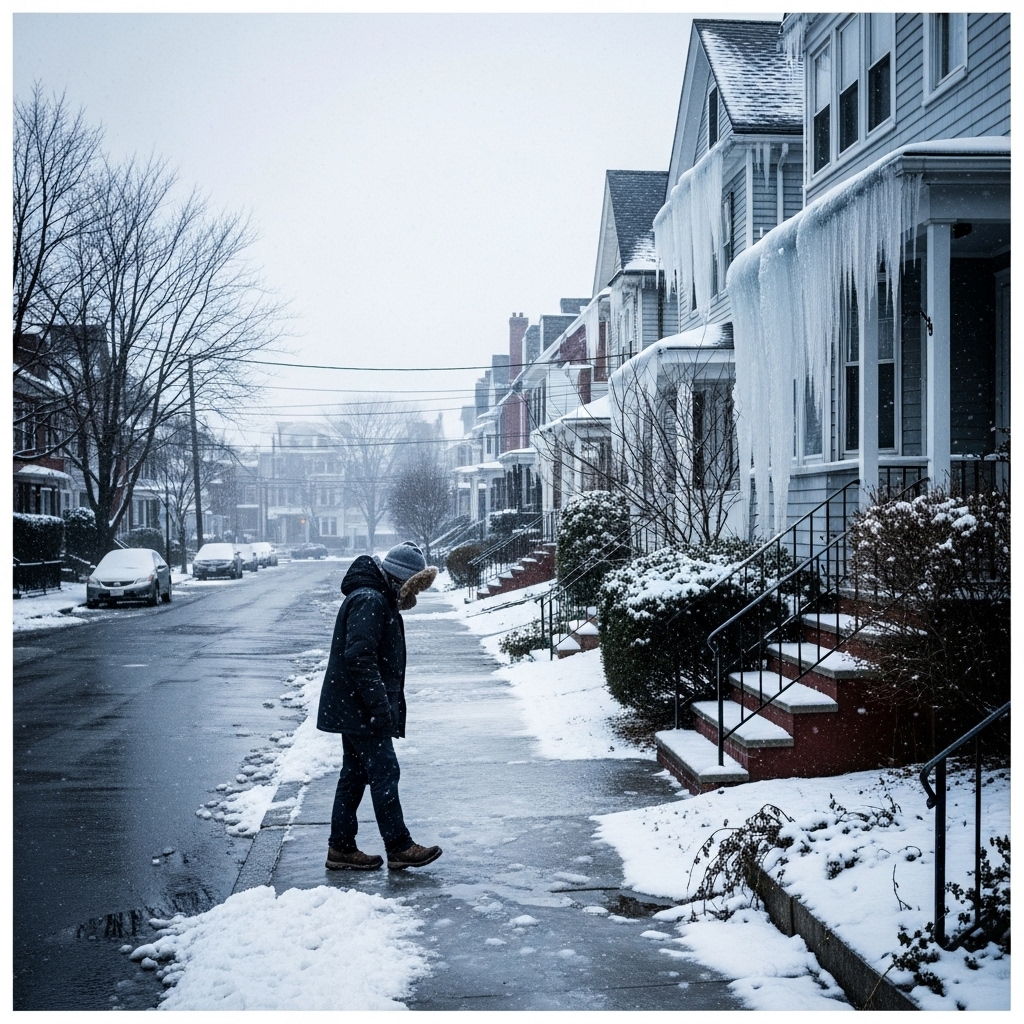
When a Nor’easter pins ice along your eaves, water backs up under shingles and finds every crack it can. In Boston, that often means stains creeping across plaster ceilings in Beacon Hill, buckled hardwoods in Back Bay brownstones, or soggy insulation in triple-deckers from Dorchester to Somerville. If you’re staring at drips and an adjuster’s “maintenance” speech, this guide is for you.
We’re Insurance Claim HQ. Our practice includes property insurance claims. We pursue the benefits available under your policy. Outcomes vary; you remain responsible for your deductible and any non-covered costs. Here’s how to protect your claim, your home, and your timeline.
---
Your Biggest Questions After a Boston Nor’easter Ice Dam
Is ice dam damage covered by homeowners insurance in Massachusetts?
Often, yes. Most policies cover weight of ice/snow and the ensuing sudden water damage to interiors. The key is how the loss is documented and framed (see Coverage 101 below).
How fast do I need to report the loss and file paperwork?
Prompt notice as soon as you discover damage. If the insurer requests a signed Proof of Loss, the Massachusetts Standard Fire Policy generally provides about 60 days to respond. Confirm your policy and review specifics with a Massachusetts-licensed attorney.
The adjuster says it’s “maintenance.” What does that even mean, and how do I fight it?
“Maintenance” is a wear‑and‑tear exclusion. But ice dams are sudden events. Use weather data, photos of ice ridges, and moisture mapping to tie your loss to this storm—then rely on ensuing loss language that puts coverage back in play.
Can I get my family into a hotel or short‑term rental now? Who pays?
If rooms are uninhabitable due to a covered loss, ask for Additional Living Expenses (ALE) immediately. That can include hotel/short‑term rental, parking, pet fees, and increased meal costs.
What if there’s mold or my plaster ceilings collapsed—are those covered?
Ensuing water damage to ceilings, walls, floors, contents is commonly covered. Mold is often capped by a sublimit unless you bought extra coverage. Ask for the exact sublimit and any mold buyback.
When do I need an attorney?
Call a lawyer when the carrier blames “maintenance,” delays/lowballs, denies coverage, or ignores evidence. Also call when deadlines (Proof of Loss, suit limitation) are approaching, or you’re considering a 93A/176D bad faith demand.
---
The First 72 Hours: Exactly What to Do (and What Not to Do)
1) Document the scene before anything moves
- Take wide shots of roof edges/soffits and icicles, interior staining, active drips, buckled floors, and wet insulation.
- Time‑stamp photos and videos. Screenshot NWS Boston radar/alerts for the storm window.
2) Mitigate without making it worse
- Catch water safely, tarp where possible, and use licensed emergency mitigation (dry‑out) vendors.
- Don’t chip ice at the eaves—it’s dangerous, can void coverage, and can cause new damage.
- Keep all receipts and business cards; ask vendors to note “emergency mitigation due to Nor’easter ice dam” on invoices.
3) Notify your insurer promptly and in writing
- Report the claim, get a claim number, and request a certified copy of your full policy (with endorsements).
- Ask the carrier to approve emergency measures in writing and identify any coverage limitations they believe apply.
4) Protect your living situation
- If areas are uninhabitable, request ALE immediately.
- Save proof of uninhabitability: contractor notes, moisture readings, photos, and any Boston Inspectional Services Department (ISD) advisories.
---
Coverage 101: Are Boston Nor’easter Ice Dams Covered?
Typical policy pathways to coverage
- Weight of ice/snow/sleet: Damage from ice ridges and backup is often a named peril or a covered cause of loss.
- Ensuing loss: Even if wear‑and‑tear contributed, sudden interior water damage from a covered event is often covered.
Common carve‑outs (and how they really work)
- Interior water damage often requires that water entered through a building component first damaged by a covered peril. Ice dams typically satisfy this when properly documented.
- Mold/fungus: Look for sublimits and any purchased mold buyback.
- Ordinance or Law (code upgrades): In older Back Bay/Beacon Hill brownstones and triple‑deckers, code‑required upgrades can be significant. Confirm your limit.
What’s usually not covered
Purely preventive ice removal, routine roof maintenance, or pre‑existing rot—unless necessary to complete covered repairs or allowed under Ordinance or Law coverage.
---
Beating the “maintenance” excuse: practical, step‑by‑step
Reframe the cause with facts
Tie the loss to this Nor’easter with weather reports, photos of ice ridges at eaves, and fresh stain patterns that appeared right after the storm.
Prove reasonable upkeep
Share roof age, recent gutter/roof invoices, fall cleanings, and inspection reports. A middle‑aged roof with ordinary wear can still reflect reasonable maintenance.
Use building science, not opinion
- Request moisture mapping and thermal imaging. Bag/label wet materials for inspection.
- Ask for the carrier’s engineer report in writing; scrutinize assumptions.
- When needed, bring in a building envelope expert or public adjuster to counter unsupported “lack of maintenance” claims.
Invoke your policy language
- Point to “weight of ice and snow” and “ensuing loss” provisions.
- Ask the adjuster to identify, in writing, every exclusion they’re relying on—and why it applies to each line item.
Keep the tone firm, not hostile
Send short, professional emails summarizing site visits, agreements, and deadlines. Confirm every promise in writing.
---
Deadlines that decide outcomes: Coverage, claim, and litigation clocks in Massachusetts
Notice and proof requirements
- Give prompt notice when you discover damage—don’t wait for a spring thaw.
- If requested, most policies (and the Massachusetts Standard Fire Policy) require a signed Proof of Loss within 60 days. Put it on your calendar.
Suit limitation period
Many Massachusetts homeowners policies include a suit‑limitation period (often around two years) running from the date of loss. Negotiation doesn’t pause contractual deadlines—check your policy.
Bad faith timing (leverage that moves cases)
A 93A demand letter typically triggers a 30‑day response window. Remedies depend on the facts and law; consult a Massachusetts-licensed attorney about your options.
Appraisal and other ADR
Appraisal can resolve scope/price disputes when coverage is accepted. It won’t fix coverage denials like “maintenance.”
---
Evidence kit: what to gather and keep organized
- Policy: Certified full policy with endorsements and prior renewals.
- Photos/videos: Before‑storm (if you have them), during, and after; progression of stains; active drips; ice formations.
- Expert materials: Moisture logs, thermal images, roofer/public adjuster reports, engineering opinions, code citations, permits.
- Paper trail: Emails/texts with adjusters, call summaries, carrier estimates, checks, denials/reservations of rights, ALE receipts.
- Repair docs: Itemized estimates (Xactimate or similar), material spec sheets, code upgrades with references to 780 CMR (Massachusetts State Building Code) and Boston ISD requirements.
---
Smart claim strategy with your adjuster
Control the site meeting
Have your roofer or PA present to point out ice‑dam signatures (ice scallops at eaves, backed‑up underlayment, rafter‑tail staining).
Scope before price
Get agreement on what’s damaged and why before haggling over unit costs. Use line‑item estimates with photos per room.
Push for undisputed payments
Request immediate payment for undisputed portions (ALE, emergency services, demo/dry‑out) to prevent secondary losses and mold.
Don’t rush a release
Never sign a full and final release for a partial payment. Clarify that any check is “partial/undisputed,” not a full settlement.
---
When your claim is delayed, underpaid, or denied: escalation options
A tactical escalation ladder
- Internal appeal with a claims supervisor; request reconsideration with new evidence.
- Appraisal for scope/price only when coverage is accepted.
- 93A/176D demand letter outlining alleged unfair claim settlement practices (e.g., misrepresenting policy provisions, inadequate investigation). Discuss applicability with Massachusetts counsel.
- Complaint to the Massachusetts Division of Insurance—attach your evidence timeline.
- File suit when the carrier digs in on a bad liability position or refuses to pay fair value.
Bad faith exposure that gets attention
Courts can award multiple damages and attorney’s fees for willful/knowing violations under c. 93A/c. 176D. Remedies depend on proof. Work with a Massachusetts-licensed attorney to prepare any demand.
---
Special issues in Boston properties
Historic and attached homes
Beacon Hill/Back Bay brownstones and condo associations mean limited tarping access, shared walls/roofs, and master policy coordination. Document both unit‑level and common‑area impacts.
Triple‑deckers and multifamily
Stacked utilities and plaster ceilings require safe dry‑out, and often asbestos/lead testing before demo. Code‑driven electrical checks may be needed.
Local logistics that help your claim
- Emergency vendors bottleneck along I‑93 and the Pike after storms. Save the earliest dates you were offered to show reasonable mitigation efforts.
- If leaks caused falls or exposure requiring urgent care (MGH, Tufts, or your local ER), keep discharge notes—they support ALE and mitigation decisions.
---
Money map: building a comprehensive estimate
Direct physical damage
Roof, ice‑and‑water shield, underlayment, drip edge, ventilation, insulation, drywall/plaster, millwork, flooring, and paint with proper masking and dust control.
Contents
Textiles, rugs, electronics, built‑ins—clean vs. replace decisions backed by vendor inspections.
Code upgrades
Ice‑barrier to 24" inside the heated wall line (per residential roofing code), proper attic ventilation, updated insulation R‑values per energy code. Cite 780 CMR sections.
Soft costs
Permits, engineering, temporary heat, storage, debris disposal.
ALE
Comparable rental rates in your neighborhood, parking, pet fees, and increased meal costs if your kitchen is down.
---
FAQs we hear every storm season
Are ice dams covered by homeowners insurance in Massachusetts? Often, yes—especially when you document ice formation and ensuing sudden water damage.
How long do I have to file a claim for ice dam damage? Give prompt notice upon discovery, then track the two‑year suit limitation from the date of loss.
Will my insurer pay to remove the ice? Preventive ice removal is usually not covered. If removal is necessary to complete covered repairs, it may be included—ask.
Can I get denied for “lack of maintenance” if I cleaned my gutters in the fall? You can still face that claim. Counter it with evidence of upkeep plus storm‑specific proof (weather data, ice ridges, fresh stains).
What if my condo association says it’s my unit; the carrier says it’s the master policy? Get both policies and the condo docs. Unit vs. master coverage depends on bylaws, declarations, and policy language.
Should I use the insurer’s preferred contractor? You’re not required to. Choose a contractor you trust; the insurer owes fair cost to repair with like kind and quality.
What is a Proof of Loss and do I have to sign it? It’s a sworn statement of the amount you’re claiming. If requested, you must submit it—make sure it reflects your full scope and note any disputes.
When should I call an attorney versus a public adjuster? Public adjusters are strong on scope/pricing. Call an attorney when coverage is denied, delayed, or lowballed; when you need a 93A/176D strategy; or when deadlines loom.
---
If you need backup: how we step in (and what it looks like)
- Straight talk, no three‑piece suit unless we’re in court. We help policyholders pursue benefits available under their policies. Outcomes vary; you remain responsible for your deductible and any non-covered costs.
- We quarterback evidence, deadlines, and negotiation—and press 93A/176D bad‑faith law when carriers play the “maintenance” card without proof.
- Fast triage from our Boston office at 44 School St, 6th Floor—site inspections, policy review, and a practical plan within days.
- Contingency-fee representation may be available where permitted by law. Court costs and case expenses may be the client’s responsibility, per the written engagement agreement.
---
Quick checklist (copy into your phone)
- Report the claim; request your full policy; calendar 60‑day Proof of Loss (if requested) and the two‑year suit deadline from date of loss.
- Photograph everything; capture NWS Boston storm data; start safe mitigation; save receipts.
- Get an independent scope: roofer/PA estimate with photos and code notes.
- Ask the insurer to identify exclusions in writing; request undisputed payments now.
- If denied or lowballed: supervisor appeal → appraisal (if coverage accepted) → 93A/176D demand → Division of Insurance complaint → litigation.
---
Talk with a Boston-based attorney about ice-dam claims
If you’re hearing “maintenance” while watching water spots spread, consider a call to review deadlines and next steps.
Insurance Claim HQ — Boston Office
44 School St, 6th Floor, Boston, MA 02108
insuranceclaimhq.com | 844‑844‑CLAIM
We can review your options and next steps. Outcomes vary; you remain responsible for your deductible and any non-covered costs. Contact us to schedule a no-obligation strategy session.
Attorney Advertising. General information only; not legal advice. Reading this content does not create an attorney–client relationship. Results vary; no guarantee. Representation is limited to jurisdictions where our lawyers are licensed, and we associate with local counsel when required. Contingency-fee representation may be available; court costs and expenses may be the client’s responsibility as outlined in a written engagement agreement. Consult a Massachusetts-licensed attorney regarding 93A/176D and other state-specific requirements. Coverage outcomes depend on policy language and facts—review your policy and deadlines.